
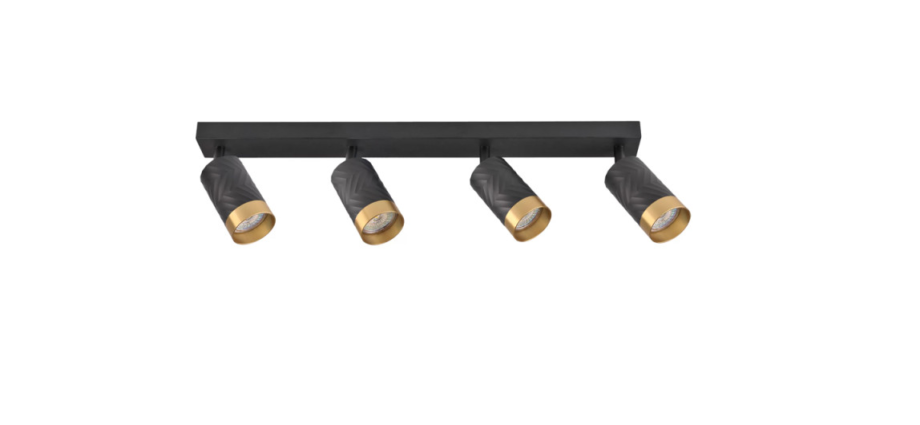
A fitting sold without a lamp gives the buyer an extra design decision. The housing, mounting and visible finish can be selected separately from the replaceable light source, making it easier to choose a suitable color temperature or beam angle where the fixture permits. That flexibility also creates opportunities for mistakes. A lamp with the right-looking base may be too large, exceed the fitting’s rating or produce an uncomfortable beam. Successful specification requires the luminaire and chosen bulb to be treated as a compatible system, with maintenance and future replacement considered from the beginning.
Understand exactly what the fitting includes
Product photographs sometimes show an illuminated fitting even when the light source is sold separately. Read the package contents and identify whether the item includes the housing, mounting hardware, lampholder and wiring components. Check whether the product needs an external driver or accepts a lamp designed for the intended mains or low-voltage supply. Do not assume that every fixture without a bulb is built for the same electrical arrangement.
The Luminaires without Lamps category can be used to compare housings designed for separately selected lamps. Review the permissible lamp types, socket designation, body dimensions and installation method for each product. An open directional fitting may accept a different source from a sealed decorative model. The lamp must meet the manufacturer’s stated requirements for size, power and operating conditions.
Before ordering several units, prepare a simple schedule showing the exact fitting reference and the intended lamp reference side by side. This eliminates confusion when a project contains similar-looking models with different sockets. Keep the specification available to installers and maintenance staff so that replacements do not depend on guesswork.
Choose a lamp by beam and useful illumination
Replaceable light sources offer flexibility in beam distribution, but only within the fitting’s approved design. A narrow spot may accent a picture or display object, while a wider beam generally suits circulation or casual room lighting. Compare the beam angle with the mounting height and the distance to the target surface. A small bright spot on the floor does not necessarily mean the entire room is comfortably illuminated.
Luminous output is more informative than wattage alone. A modern LED lamp can draw relatively little electricity while emitting substantial light, yet the direction and shielding of the fitting influence what reaches the task. For a row of recessed spots, use a room drawing and consistent spacing to avoid alternating bright and dim areas. Supplementary lighting may still be necessary at desks or kitchen counters.
Check the source’s color appearance and color rendering where materials or merchandise need to be viewed accurately. Two bulbs with the same nominal warm-white label can look different when placed side by side. In a continuous row, use consistent specifications rather than mixing whatever replacement happens to be available. This helps preserve the planned appearance over the life of the installation.
Check physical fit and operating temperature
A socket designation does not tell the whole story about fit. Some LED lamps have wider heads, longer bodies or different heat-dissipating structures than the sources they replace. Measure the available internal space and consider the opening through which a lamp will be installed. A source that touches the diffuser or cannot be seated fully should not be forced into place.
Enclosed fittings can create warmer operating conditions than open holders. Confirm that the chosen lamp is approved for that environment and observe the luminaire’s permitted power and electrical ratings. An LED source should not be selected solely because its wattage is lower than the older lamp. The complete assembly must remain within the manufacturer’s installation instructions, including required clearances around the housing.
In a ceiling recess, consider how the lamp will be replaced. Some fittings allow access from below, while others may require a part of the trim to be removed. Test the procedure with one installed example before covering a large area. Easy service access can become more valuable than a minor difference in appearance when dozens of lights share the same design.
Coordinate dimming and other controls
A replaceable LED bulb is not necessarily dimmable, and a dimmable bulb is not automatically compatible with every wall controller. Review the lamp’s specified dimming method and any restrictions on minimum load. Poor matching can produce flicker, limited adjustment or unexpected switch-off at low brightness. The luminaire itself may also introduce control requirements, particularly if it uses a separate power supply.
For a restaurant or living room, test the complete lamp-and-control combination at the desired low level before ordering a large quantity. A warm and comfortable scene may be easy to achieve with one approved combination and difficult with another. For corridors and storage rooms, simple on-off switching can be more practical than unnecessary automation. Design decisions should follow actual use rather than the number of available features.
Sensor controls require separate consideration. An occupancy sensor must detect movement from normal approach directions without causing nuisance switching. Where several fittings share a circuit, verify that the connected load is compatible with the controller. Keep a record of the approved bulb model so later replacement does not alter the control behavior unexpectedly.
Consider visual consistency across many rooms
A hotel corridor or office floor may contain dozens of identical housings. Their appearance can remain consistent even when lamps are changed, but light color and beam differences become obvious along a long row. Specify the lamp characteristics carefully and consider keeping a small supply of compatible replacements. The objective is consistent lighting, not simply fitting the cheapest available bulb into an attractive shell.
Decorative finishes also matter. A white trim may blend into a plaster ceiling, while a black finish makes a row of spots visually prominent. Choose the housing to suit the architecture, then select the lamp for optical performance. Reversing that order can result in a visually suitable fitting that cannot accommodate the preferred source or produce the necessary beam.
When layouts change, replaceable-bulb designs may permit adjustments in color temperature or beam angle without replacing the whole fitting, provided approved alternatives exist. The flexibility is useful in retail spaces where displays are revised, but it must not encourage mixing incompatible products. Review changes as a new specification each time.
Prepare a realistic long-term maintenance routine
Keep the fitting and lamp identifiers together in the handover documentation. Record the correct socket, supply details, maximum permitted rating and any relevant dimming compatibility. Label spare lamps so that maintenance staff do not accidentally install an unsuitable source. If a fixture is in a high ceiling or difficult-to-reach location, plan how it can be accessed safely before the building is occupied.
During inspections, look for loose trims, damaged sockets, discoloration and signs of excessive heat. Electrical faults require appropriate diagnosis rather than repeated substitution of bulbs. Isolate the supply and follow the manufacturer’s instructions before service. A fitting that repeatedly destroys replacement lamps needs investigation of its electrical and thermal conditions.
Luminaires supplied without lamps are best viewed as configurable equipment. They provide choice over the light source, but each choice has consequences for fit, comfort and control compatibility. A clear component schedule and a small installation test turn that flexibility into a reliable and maintainable lighting scheme.